First Tattoo Guide: Everything You Need to Know Before Your First Ink
So you’re thinking about getting your first tattoo? That mix of excitement and pure terror you’re feeling right now? Totally normal.
I remember sitting in the waiting room for my first piece, wondering if I was making a huge mistake or the coolest decision of my life.
Spoiler alert: it was the latter, but only because I did my homework first.
Look, getting inked isn’t something you should rush into after three beers and a dare. But it’s also not some super exclusive club where you need a secret handshake to join.
Let me walk you through everything you need to know so you don’t end up with regret permanently etched on your skin.
Questions to Ask Yourself First
Before you even start scrolling through Pinterest for designs, pump the brakes for a second. Why do you actually want this tattoo?
Is this really for you? If you’re getting matching infinity symbols with someone you’ve been dating for three weeks, maybe wait a bit.
Trust me on this one. The best tattoos come from a place of personal meaning, not peer pressure or relationship milestones that might not age well.
Here’s my rule: the six-month test. If you’ve been thinking about the same design for half a year and you still love it, you’re probably good to go.
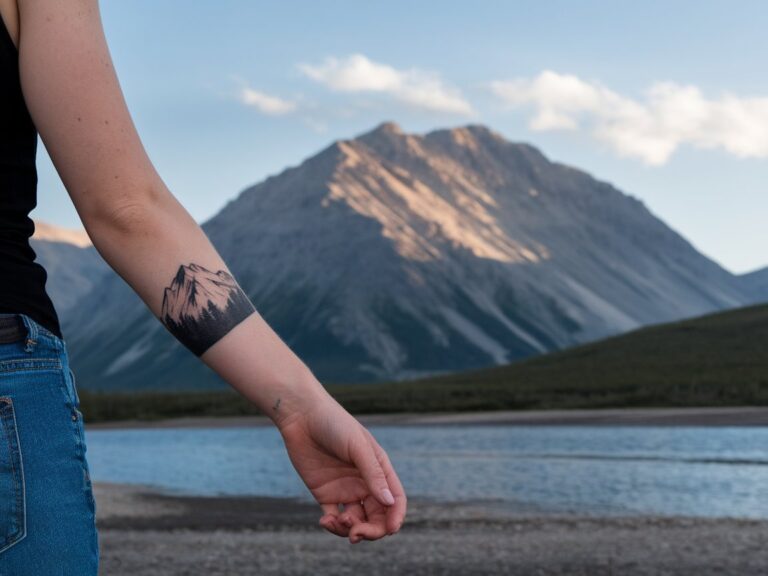
Still obsessed with that mountain range on your forearm? Green light. That tribal band you thought was cool last Tuesday? Might want to sit on that one a little longer.
Ask yourself honestly: Can I see this on my 40-year-old self? Your 60-year-old self? Bodies change, trends fade, but that ink is pretty much forever (or at least really expensive and painful to remove).
Red Flags Worth Pausing For
- Getting matching tattoos with a new partner (seriously, just don’t)
- Copying someone else’s deeply personal tattoo
- Making this decision while drunk or high
- Feeling pressured by friends who already have tattoos
- Wanting it because it’s trending on social media right now
If any of these sound familiar, take a step back. Your skin can wait.
Finding the Perfect First Tattoo Design
Alright, so you’ve passed the self-interrogation phase.
Now comes the fun part: choosing your design.
Should you start small or go big? IMO, starting with something smaller is the smart move.
Not because you can’t handle a full sleeve (you probably can), but because you don’t know yet how your body reacts to tattooing, how you feel about the permanence, or even if you like the experience.
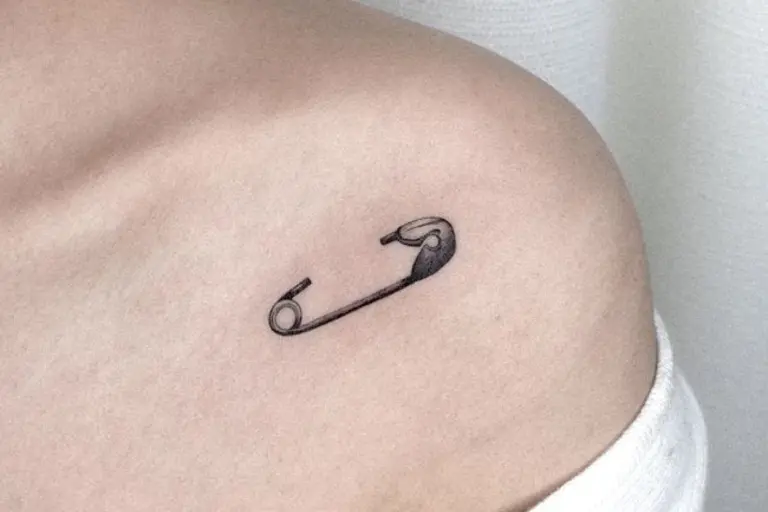
Small doesn’t mean boring, though. Some of the most stunning tattoos I’ve seen are tiny, delicate pieces that pack serious visual punch.
Design Styles That Work Great for Beginners
Minimalist line work is huge right now, and for good reason. Clean, simple lines age beautifully and look sophisticated without being overwhelming.
Think single-line drawings, geometric shapes, or delicate nature elements.
Simple symbols are another solid choice. A small arrow, a moon phase, a meaningful glyph. These designs are timeless and won’t make you cringe in five years (probably).
Text and quotes can be meaningful, but here’s where I get a little sarcastic: please, for the love of all that is holy, check your spelling.
And maybe reconsider that inspirational quote that’s plastered on every motivational Instagram account.
You want something that resonates with YOU, not something that got 10k likes.
Small nature elements like flowers, leaves, mountains, or animals work beautifully as first tattoos.
They’re versatile, meaningful, and easy to place anywhere on your body.
Working With Your Artist
Here’s something nobody tells you: your artist isn’t a mind reader. Bring reference images. Lots of them.
Even if you want something custom, showing your artist what you like (and don’t like) helps them understand your vision.
Flash designs those pre-drawn tattoos on the shop walls are actually perfect for first-timers.
They’re designs the artist has done before, so you know exactly what you’re getting.
No surprises, no “that’s not what I pictured” moments.
Want something custom? Cool, but be realistic about your budget and timeline. Custom work costs more and might require multiple consultations. Worth it? Absolutely. But know what you’re getting into.
Common First Tattoo Mistakes to Dodge
Names. Just… no. Unless it’s your kid’s name or a deceased loved one, skip the names. Relationships end.
Friendships change. That “Sarah Forever” might become “Sarah Never Again” real quick.
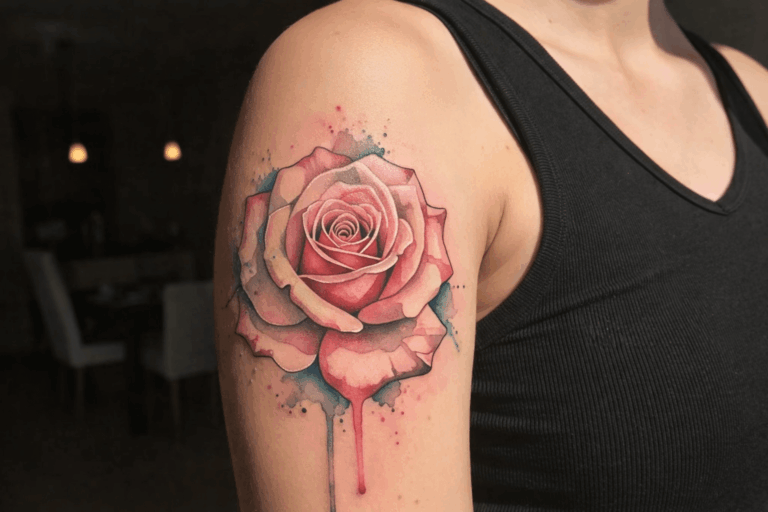
Overly trendy designs might seem cool now, but that geometric mandala or watercolor splash everyone’s getting? It’s this generation’s tribal armband.
Choose something with staying power.
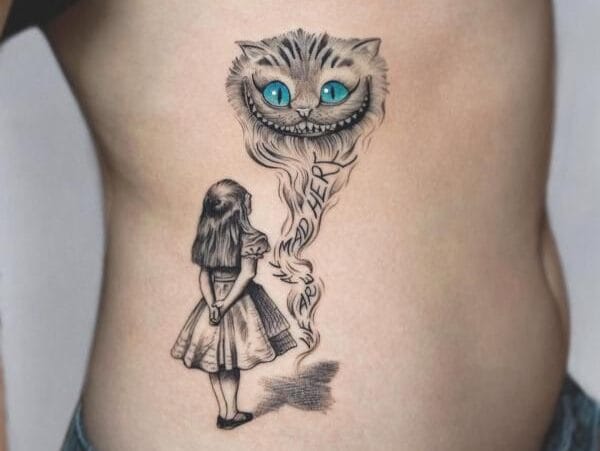
Too much detail in tiny spaces doesn’t work. Your artist should tell you this, but if you’re trying to cram the Mona Lisa into a space the size of a quarter, it’s going to turn into a blob as it ages.
Inside jokes that need explanation lose their charm when you’re explaining them for the 47th time. If it needs a backstory to make sense, reconsider.
Where Should You Get Your First Tattoo?
Location, location, location. This isn’t just about finding wall space for your new art it’s about pain tolerance, visibility, and how the area will age.
Best Spots for First-Timers
Outer forearm is money. It’s one of the less painful spots, easy for the artist to work on, heals relatively quickly, and you can show it off or cover it depending on your sleeve length. Win-win-win-win.
Upper arm and shoulder are classic for a reason. The pain is manageable, you’ve got a nice canvas to work with, and it’s easy to hide for professional settings.
Plus, there’s something undeniably cool about a shoulder piece.
Calf gives you decent space, moderate pain levels, and it’s easy to forget you’re being tattooed (until the artist hits certain spots, anyway). Great for designs that need more room to breathe.
Thigh is the secret weapon. Lots of space, relatively low pain, and completely hideable.
If you’re worried about career implications, this is your spot.
The Real Talk About Pain
Let’s address the elephant in the room: yes, tattoos hurt. Anyone who tells you otherwise is either lying or has nerve damage. But here’s the thing it’s not unbearable.
Least painful areas: Outer arm, thigh, calf, upper back Moderate pain: Forearm, shoulder, outer bicep
More painful: Ribs, feet, hands, spine, neck “Why did I think this was a good idea” painful: Armpit, elbow, behind the knee, anywhere on bone with minimal fat
The pain feels different to everyone. Some describe it as a cat scratch that won’t stop.
Others say it’s like a burning sensation or constant vibrating pressure. FYI, the first 15 minutes usually feel the worst, then your body kind of adjusts and you get used to it.
Ever wondered why people get multiple tattoos if it hurts? Because the end result is worth those temporary hours of discomfort.
Your brain releases endorphins during the process, so some people actually enjoy the sensation. Weird, right? 🙂
Consider the Professional Angle
Real talk: tattoo stigma has decreased massively, but it still exists in certain industries.
If you’re going into law, finance, or corporate America, maybe don’t get hand or neck tattoos right out the gate.
That said, forearms and other easily coverable spots give you flexibility. You can be fully inked and professional it’s 2025, not 1985.
How to Choose Your Tattoo Artist
This is THE most important part of the entire process. Your design could be incredible, but a bad artist will ruin it.
A good artist can make even a simple design look absolutely stunning.
The Research Process
Start with Instagram. Search for artists in your area and look at their portfolios. Every legit artist has one.
Look for consistency in their work do you like multiple pieces they’ve done, or just one?
Check reviews on Google, Yelp, Facebook. Read them carefully. One or two negative reviews happen, but patterns of complaints are red flags.
Visit the shop in person. Is it clean? Does it smell like antiseptic? Are the artists professional? Your gut will tell you a lot here.
Schedule a consultation before committing. Any good artist will offer this (sometimes for free, sometimes for a small fee that goes toward your tattoo).
This is where you’ll discuss your design, placement, pricing, and get a feel for whether you click with this person.
What to Look For
Specialization matters. Some artists excel at realism, others at traditional, some at fine line work.
Don’t ask a traditional artist to do delicate minimalist work you won’t get their best.
Shop cleanliness is non-negotiable. Everything should be sterile. Artists should be using gloves, new needles (opened in front of you), and proper sanitization practices. Health certifications should be visible.
Communication is key. Your artist should listen to your ideas, offer suggestions, and be honest if something won’t work. If they’re dismissive or pushy, walk away.
Portfolio quality tells you everything. Look at healed tattoos, not just fresh ones. Check if lines are clean, colors are saturated, and the overall execution is solid.
Red Flags That Scream “Run”
- Dirty or disorganized shop environment
- No portfolio available to review
- Working from home (in most places, this isn’t legal or safe)
- Prices that seem too good to be true (they are)
- Unwillingness to answer your questions
- Pushy about getting started immediately
- No visible health certifications
Questions to Ask During Consultation
“How long have you been tattooing?” Experience matters. Not saying newbies can’t be great, but you want at least a couple years under their belt.
“Do you have experience with this style?” Show them your references. Can they deliver what you want?
“What’s your healing advice?” Good artists care about aftercare because it affects how their work looks healed.
“Can you show me similar work you’ve done?” This confirms they can execute your vision.
“What’s the estimated time and cost?” No surprises here you need to know what you’re paying.
The Price Reality Check
Here’s the truth: good tattoos aren’t cheap, and cheap tattoos aren’t good. I’ve never seen this rule violated successfully.
Expect to pay at least $100 at any reputable shop, even for something small. Most shops have minimums.
Hourly rates run anywhere from $100-$250+ depending on the artist’s experience and your location.
Is it expensive? Yeah. Is it worth it? Absolutely. This is permanent art on your body.
You’re not trying to find the budget option here. Save up if you need to your skin will thank you.
Preparing for Your Appointment
You’re booked, you’re excited, now what? Don’t show up unprepared.
The Week Before
Get good sleep the night before. You want to be rested and alert, not exhausted and cranky.
Eat a substantial meal within a couple hours of your appointment. Low blood sugar + tattoo = bad time. You might get dizzy or nauseous on an empty stomach.
Stay hydrated for several days leading up. Hydrated skin takes ink better and heals faster.
Wear appropriate clothing. If you’re getting your shoulder done, wear a tank top. Getting your thigh tattooed? Shorts.
You get the idea. Make it easy for your artist to access the area.
Bring snacks and water for longer sessions. Your artist might take breaks, and you’ll want fuel.
Shower and moisturize the area. Show up clean, people. Your artist will appreciate it.
Absolutely Don’t Do These Things
No alcohol for 24 hours before. It thins your blood, which means more bleeding and worse ink retention.
Avoid blood thinners like aspirin or ibuprofen. Check with your artist if you’re on any medications.
Don’t get sunburned in the area. Seriously, that’s just asking for a terrible experience.
Don’t shave the area yourself. Your artist will do this properly with a fresh razor.
Don’t bring your entire friend group. Most shops allow one person max, and honestly? You’ll be more relaxed without an audience.
What to Bring
- Valid ID (you must be 18+, no exceptions)
- Payment (cash is often preferred, but ask about their policy)
- Reference images if you have them
- Headphones for music or podcasts (if the artist is cool with it)
- A sweater because shops can get cold
What to Expect During the Tattoo
The day has arrived. You’re nervous, excited, maybe questioning all your life choices. Let’s walk through what actually happens.
The Process Step-by-Step
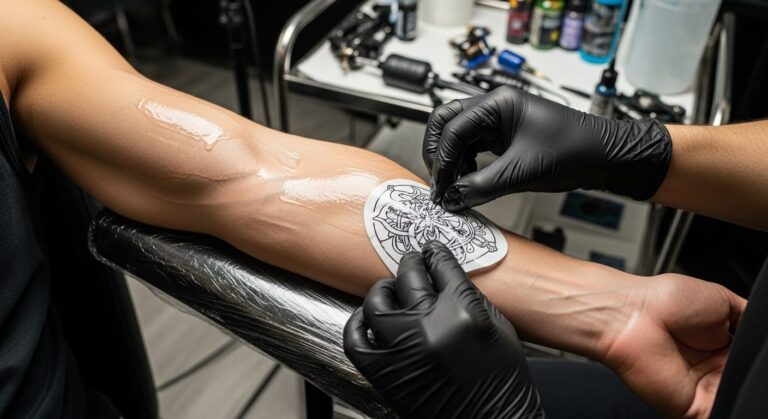
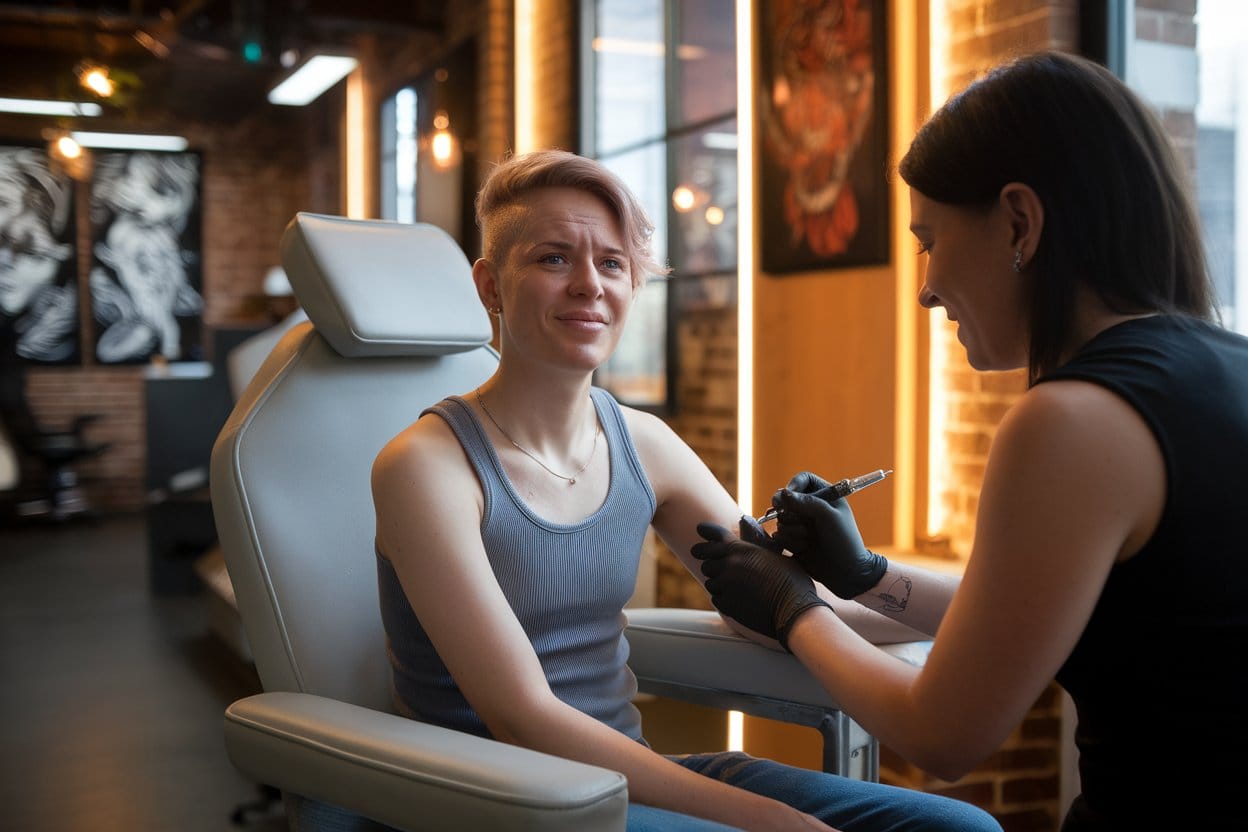
1. Prep and sanitize. Your artist will clean and shave the area, then apply the stencil. This is your design outline.
2. Stencil placement. Here’s your chance to make sure you love the placement. Speak up if you want it moved.
Once the needle hits skin, it’s too late. Don’t be shy the artist would rather adjust now than have you hate the placement forever.
3. Tattooing begins. And here we go. The needle machine fires up (it’s loud, by the way), and your artist starts with the outline.
This usually hurts the most because the needle is going deeper.
4. Breaks as needed. Feeling faint? Need to pee? Speak up. Artists expect breaks, especially for first-timers or longer sessions.
5. Final touches and review. Your artist will do touch-ups, make sure everything looks clean, and show you the finished piece before wrapping it up.
Managing the Experience
Breathe. Deep, steady breaths help manage pain and keep you from passing out.
Shallow breathing or holding your breath makes everything worse.
Ask for breaks if you need them. Zero shame in this. I’ve seen big, tough guys need breaks. It’s normal.
Communicate with your artist. If something feels wrong (not just painful, but WRONG), say something. Good artists want you comfortable.
Don’t watch the needle if needles freak you out. Bring music, podcasts, or chat with your artist. Distraction is your friend.
Stay still. This should be obvious, but don’t flinch or jerk. You could ruin a line or hurt yourself.
The Honesty You Need
If you feel dizzy, nauseous, or faint, tell your artist immediately. Getting tattooed affects people differently.
Your artist has seen it all and won’t judge you. They’d rather have you take a break than have you pass out.
Some people handle hours like champs. Others tap out after 30 minutes. There’s no trophy for suffering through it. Do what works for you.
Taking Care of Your New Tattoo
Congratulations! You’re officially tattooed. But the work isn’t over yet. Aftercare makes or breaks how your tattoo heals and looks long-term.
First 24 Hours
Your artist will wrap your fresh tattoo in either plastic wrap, a bandage, or one of those fancy second-skin products.
Follow their specific instructions on when to remove it. Generally, it’s 2-5 hours, but some prefer overnight.
Wash it gently with lukewarm water and unscented antibacterial soap. Use your hands, not a washcloth.
Pat it dry with a clean paper towel (not a regular towel, those harbor bacteria).
Apply a thin layer of recommended ointment. And I mean thin like, you can barely see it.
Slathering on too much suffocates your skin and can actually pull ink out.
Don’t re-bandage unless your artist specifically tells you to. Your tattoo needs to breathe.
Week 1-2: The Critical Period
Wash 2-3 times daily with unscented soap. Morning, evening, and after any activity that makes you sweaty.
Moisturize with unscented lotion (Lubriderm, Aveeno, Cetaphil all work great). Keep it hydrated but not soggy.
Don’t scratch or pick at the scabs and peeling skin. I know it itches like crazy. I KNOW.
But picking will pull out ink and ruin your tattoo. Slap it gently if you must, but hands off otherwise.
Wear loose clothing over the area. Tight clothing can irritate it and stick to the healing skin.
Avoid submerging in water. Showers are fine, but no swimming pools, hot tubs, baths, or ocean swims for at least 2-3 weeks. Soaking pulls out ink and introduces bacteria.
What’s Normal vs. What’s Not
Normal healing:
- Redness and mild swelling for the first few days
- Itching that starts around day 3-7 (the WORST part of healing, honestly)
- Peeling and flaking like a sunburn around days 5-14
- Colors looking dull or cloudy while healing
Warning signs (get medical attention):
- Excessive swelling or redness that spreads
- Green or yellow pus/discharge
- Fever or feeling sick
- Severe pain that gets worse after day 2
- Red streaks extending from the tattoo
Products: The Good and the Bad
Use these:
- Unscented lotion (Lubriderm, Aveeno, Cetaphil)
- Aquaphor or whatever ointment your artist recommends
- Gentle antibacterial soap
Avoid these:
- Neosporin or triple antibiotic ointment (can cause reactions)
- Scented lotions (irritation city)
- Petroleum jelly (too thick, doesn’t let skin breathe)
- Sunscreen during first 2 weeks (wait until fully healed)
Living With Your Tattoo
Your tattoo is healed (usually 2-4 weeks), and now it’s part of you. Forever. Cool, right?
Long-Term Care
Sunscreen is your tattoo’s best friend. UV rays fade ink faster than anything else. Slap some SPF 30+ on that bad boy every time you’re in the sun.
Moisturize regularly to keep colors vibrant and skin healthy. Hydrated skin = happy tattoo.
Touch-ups might be needed years down the line. This is totally normal. Lines fade, colors dull. Most artists offer free or discounted touch-ups for their work.
What If I Regret It?
Here’s something nobody talks about: first tattoo regret is common in the first 72 hours. You’re adjusting to a permanent body modification.
That’s big! Give yourself time before you spiral.
Most people who experience initial regret end up loving their tattoo after a week or two.
Your brain just needs time to adjust to seeing something new every time you look at that body part.
But if you truly hate it after the initial shock wears off? Options exist. Cover-ups can transform a bad tattoo into something beautiful.
Laser removal is expensive (way more than the original tattoo) and takes multiple sessions, but it works.
This is exactly why choosing carefully matters.
Why researching matters. Why not getting drunk in Cancun and tattooing “YOLO” on your chest matters.
The Tattoo Addiction Thing
Real talk: if you love your first tattoo, you’ll probably want more. Like, immediately.
This is called the “tattoo itch” and it’s incredibly common.
You’ll start planning your second tattoo before your first one is even healed. You’ll look at blank spots on your body as empty canvases.
You’ll start following tattoo artists on Instagram and saving design inspiration.
Welcome to the club 🙂
Ready to Get Inked?
Look, you’ve made it through this entire guide, which means you’re taking this seriously.
That’s exactly the right approach. Getting a tattoo shouldn’t be impulsive, but it also shouldn’t be terrifying.
Thousands of people get their first tattoo every single day. Most of them love it.
The ones who don’t? They usually skipped the research, chose a bad artist, or made a decision for the wrong reasons.
You’re not doing that. You’re being smart, asking questions, and preparing yourself. That already puts you ahead of the game.
Choose your artist carefully this is the most important decision in the entire process. Follow aftercare religiously your tattoo’s final appearance depends on it.
And most importantly, trust your instincts. If something feels off, it probably is.
Your body, your choice, your art. Make it count.
Now go find that perfect design and make it happen. You’ve got this.